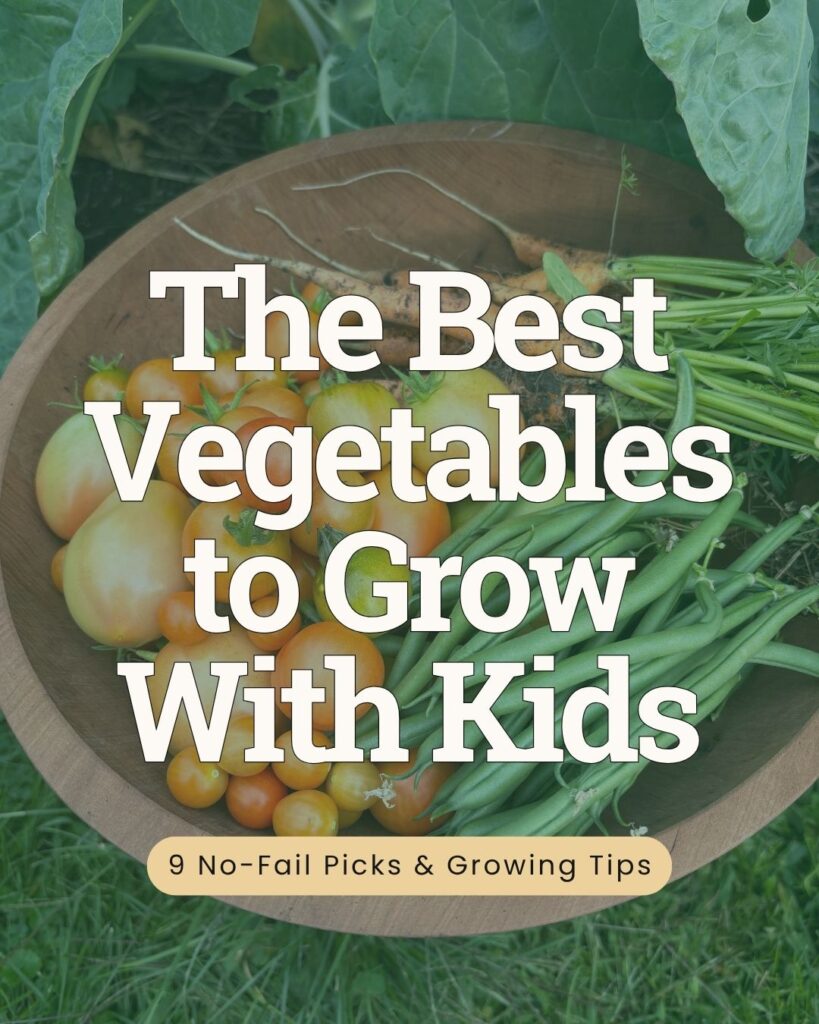
The 9 Best Vegetables to Grow With Kids
Here’s something nobody tells you before you hand a kid a packet of seeds: picking the wrong plant will sink the whole project before it starts.
It’s not that your kid doesn’t care—it’s that some vegetables take months to show any sign of life, and months is a very long time when you’re six. Or eight. Or, honestly, when you’re a grown adult who’s been checking the same patch of dirt every morning, wondering if anything’s actually happening down there.
The secret to the best vegetables to grow with kids is picking plants that grow fast enough to hold their attention, produce results they can see coming, and deliver the kind of payoff that makes them want to do it all again next year.
These nine easy vegetables do exactly that—and they work in real backyards, on balconies, in raised beds, or in containers on a sunny patio.
1. Cherry Tomatoes
Cherry tomatoes are the classic starter plant for families, and the reason is pretty simple: kids can eat them straight off the vine. There’s no meal to prep, no recipe to follow—just a sun-warmed tomato they grew themselves. That moment lands every time.
They grow well in containers and raised beds, which means even a small backyard or a balcony with decent sun is plenty of space. Look for Tumbling Tom (compact and container-perfect) or Sungold (golden yellow and genuinely delicious)—both are fast-producing and reliable for beginners.
2. Radishes
If you need a quick win in the first season (and trust me, you do), radishes are your best friend. They go from seed to harvest in as little as 25 days. That’s under a month. For a kid who’s used to instant everything, that timeline is genuinely exciting, and for a mom who’s trying to keep the momentum going, it’s a lifesaver.
They’re also about as unfussy as it gets. Sow the seeds, water regularly, and step back. Cherry Belle is the classic beginner variety—round, red, and reliably fast.
3. Cucumbers
Cucumbers grow fast and big, which is exactly the kind of drama that keeps kids checking on the garden every single day. Bush varieties like Bush Pickle or Spacemaster are brilliant for smaller spaces, and giving them a cane or trellis to climb turns the whole thing into a daily event.
4. Beans (Green Beans and Runner Beans)
Beans are practically designed for small hands—the seeds are big enough to plant without ending up all over the ground, they germinate fast, and the plants climb, which means there’s something new to look at every day. Runner beans in particular grow tall enough to feel like a real project rather than just a pot on the windowsill.
Try Blue Lake Bush Bean for a compact option that works well in containers, or go for Scarlet Runner if you want the climbing drama plus the bonus of bright red flowers that attract pollinators.
5. Peas
The best thing about peas—especially sugar snap varieties—is that you don’t have to wait to get inside to eat them. Plus, you’re essentially planting peas as seeds, so they’re big enough for little hands to easily plop in place.
Start them in early spring when the soil is still cool, give them something to climb, and let them do their thing.
6. Zucchini
If you want a plant that gives kids (and you) big confidence in the garden, zucchini is it. It grows fast, it grows dramatically, and the fruits appear almost overnight once the plant gets going.
Fair warning: one or two plants are genuinely enough. Zucchini is generous to a fault, and you will have more courgettes than you know what to do with by midsummer. Try Black Beauty for a classic, or Patio Star if you’re working with limited space.
7. Lettuce
Lettuce doesn’t top most kids’ lists of favorite veggies—but hear me out. It’s one of the fastest vegetables you can grow from seed; it works brilliantly in containers and windowsill pots, and cut-and-come-again varieties like Salad Bowl and Oak Leaf mean your kids can harvest leaves over and over again from the same plant all season long.
That ongoing harvest is more powerful than it sounds. It keeps kids connected to the plant long after the first sprout loses its novelty — and there’s something genuinely satisfying about adding leaves from your own windowsill to a lunchbox.
8. Pumpkins
Pumpkins have a kind of magic with kids that no other vegetable can quite match—especially when you plant them in spring and spend the whole summer watching them grow toward a Halloween harvest. The vines spread dramatically, the flowers are enormous, and that slow transformation from a small seed to a big orange ball shows the power of sun, water, and soil in real-time.
They need space—this isn’t a container plant—but if you’ve got a patch of ground to give them, they reward you in a big way. Try Jack O’Lantern for the classic carving pumpkin, or Baby Bear for a more compact kid-sized version.
9. Garlic
Garlic is the most satisfying thing on this list to plant—and I say that as someone who has planted a lot of things. Instead of fiddling with tiny seeds, you push a whole garlic clove directly into the soil, cover it up, and walk away. For kids, that tactile moment is genuinely memorable. There’s something very deliberate about it.
Quick heads-up: garlic is a long game. You plant in autumn and harvest the following summer — so it works best alongside faster crops that keep the kids engaged in the meantime. But when harvest day comes, and you pull a full papery bulb up out of the ground? That buried treasure moment is like nothing else. And going straight from garden to kitchen with homegrown garlic is the dream dinner moment, honestly.
Try a softneck variety like Silverskin for reliable results in most climates, or a hardneck like Rocambole if you want a little more flavor drama.